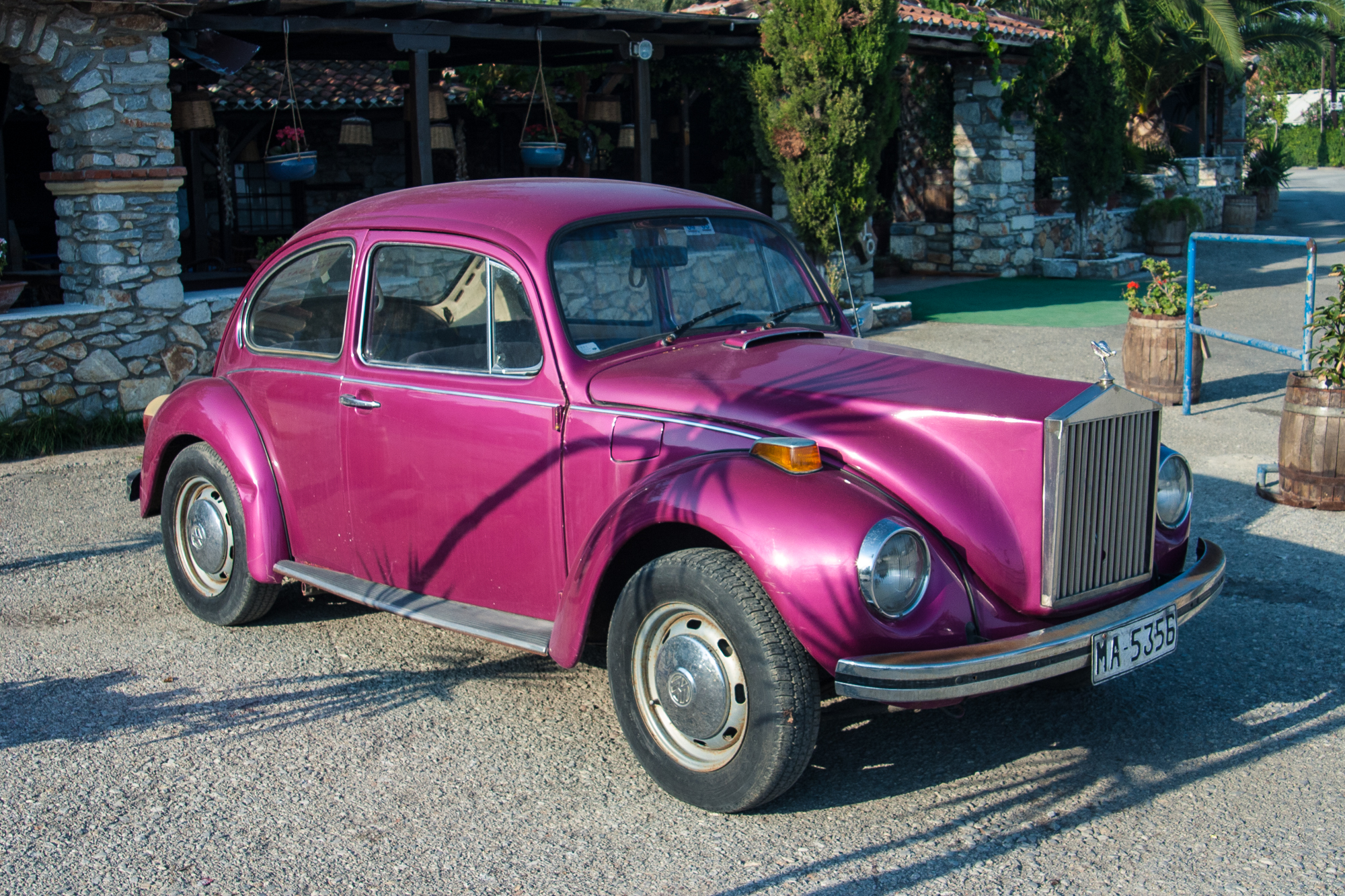
This Beetle owner thought big and bold! Spotted on Skiathos, Greece.
This Beetle owner thought big and bold! Spotted on Skiathos, Greece.

I was skimming through my early photos in Lightroom, and came across the first image I made with my first digital SLR (a Canon EOS 300D in 2004, for those who are interested).
The thing I remember most was the immediacy of the experience. No waiting to finish the film, no processing in a dark room smelling of chemicals. Click – and there it was, on the back of the camera.
The second thought that struck me was that the immediacy of digital can affect the experience in negative ways, as well as positive. There was a period when the ability to capture an image without consequence of cost or effort meant I didn’t think through what I was trying to achieve as much as I had with film.
We live and learn.
While I still shoot film for enjoyment sometimes (there is definitely a different feel to film, that no amount of digital post processing can accurately emulate), I wouldn’t want to go back.
I woke to a strong smell of smoke.
After an initial panic, I realised that the back-burning of fuel buildup in the forest around us must have started. The summer months are a time of caution in many parts of Australia. Many of the eucalyptus trees shed their bark annually, along with leaves, leading to a buildup of dry, tinder-like matter on the forest floor. Combine that with temperatures that have reached 47 degrees Celsius (117 Fahrenheit) this year and lightning strikes or careless people, and you have a recipe for serious fires.
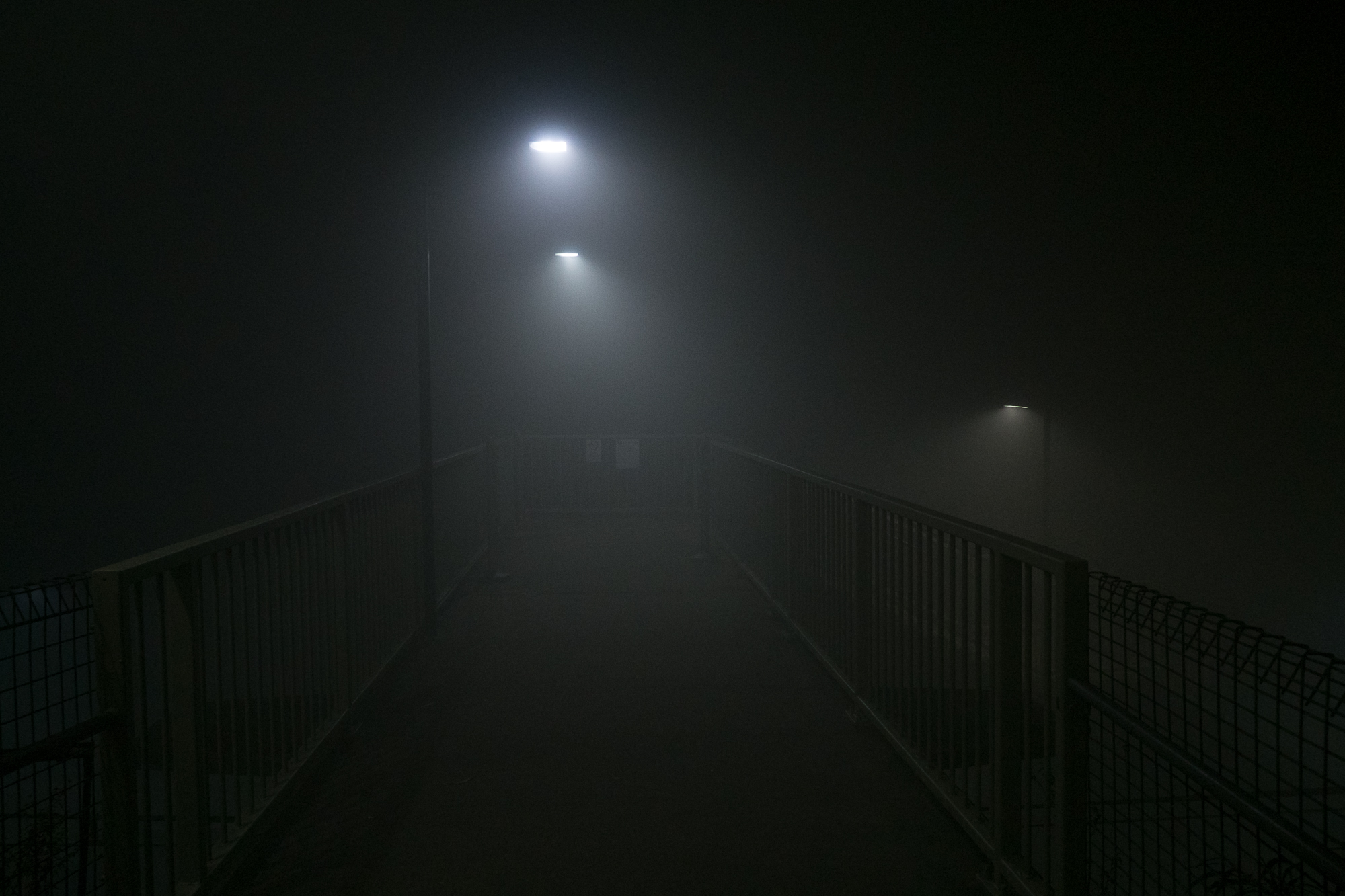
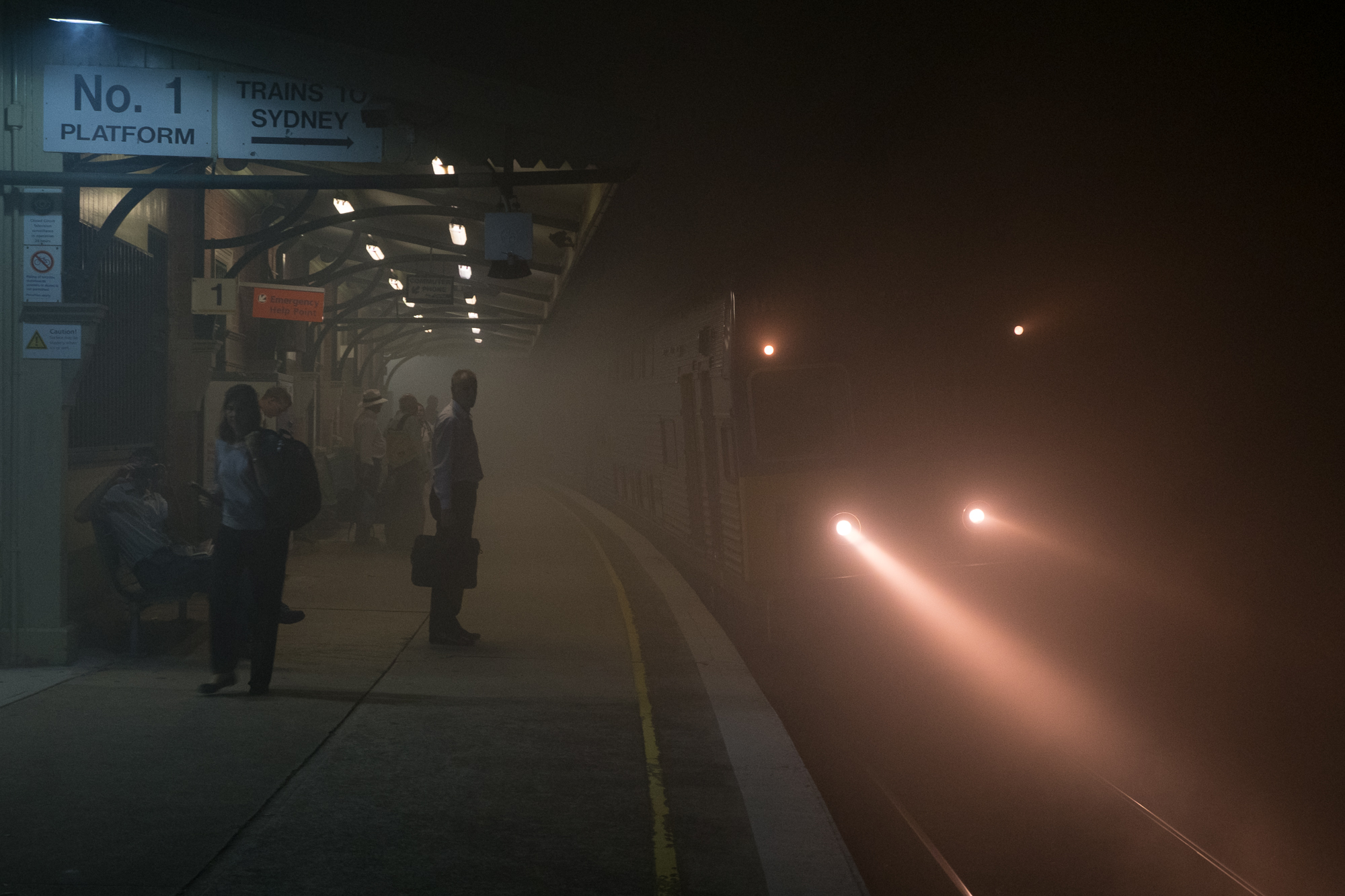
The smoke plus the morning mist we get up here in the Blue Mountains, led to pretty low visibility as I made my way to the train station for work.



This crane rose amongst the Docklands offices, a reminder of the original use of the site. It made me think of a giant mechanical stork.

Have you thought about publishing your photography yourself?
The Luminous Landscape has an article detailing how Peter Cox published his own landscape photography book using Kickstarter.
If you’ve not heard of Kickstarter, it’s a website where you can pitch an idea and raise money to fund it. Typically, the pitcher offers the final product in return for backing the idea. If the project doesn’t get enough pledges to fund the idea, you don’t pay.
There have been a number of photography projects that have got off the ground using this method, including The American Drive-in Movie Theater by Carl Weese, a project to fund a road trip across America to document the last remaining drive-in cinemas before they disappear.
My bookshelves are full of photography books. I thought it would be worth reviewing some of them, as they give me a lot of pleasure, and as the longer nights approach, I can see myself returning to many of them over the coming months. Here’s the first, from one of my favourite photographers…
Don McCullin’s professional life has several ironies in it.
Recognised as one of the UK’s leading photojournalists, he failed his photographic theory test while serving in the RAF, and was unable to become an RAF photographer. This led to him spending his national service in the darkroom.
Although he won many prestigious international awards for his work, and was honoured with a CBE in 1993, he was refused permission to cover the Falklands war by the British Government, and entry to Saudi Arabia during the Gulf war.
It is his ability to capture the human-scale experience of world events that has made his work so potent, and revealed the tragedies behind the headlines.

The Guv’nors
In 1966, McCullin joined The London Sunday Times Magazine, a relationship which lasted two decades and saw his photos covering famine in Africa, the Vietnam war and conflicts in the Middle East, Papua New Guinea, Cambodia, Northern Ireland, Uganda (where he was banned for life by Idi Amin) and El Salvador published amongst the glossy weekend ads, waking British people on a Sunday morning to the plight of the rest of the world.
McCullin’s reputation had spread beyond his peers by 1968 – The Beatles even requested a photo-shoot with him, where he captured some great moments between the band members.
Despite being best known for his photography covering conflict and crisis abroad, Don McCullin returned to England between these world events to document the lives of the poor and socially disadvantaged in his home country. He spent a lot of time in the North East of England, amongst the poverty of working families in the mining and steel industries. I can relate to a lot of these photographs, as I spent 17 years living in the area, and despite four decades having passed, much of the social disadvantagement he shows is still present today.
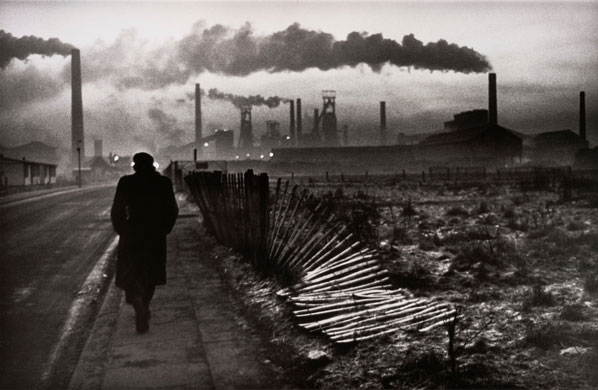
Early Shift
I have been manipulated, and I have in turn manipulated others, by recording their response to suffering and misery. So there is guilt in every direction: guilt because I don’t practice religion, guilt because I was able to walk away, while this man was dying of starvation or being murdered by another man with a gun. And I am tired of guilt, tired of saying to myself: “I didn’t kill that man on that photograph, I didn’t starve that child.” That’s why I want to photograph landscapes and flowers. I am sentencing myself to peace.
– Don McCullin
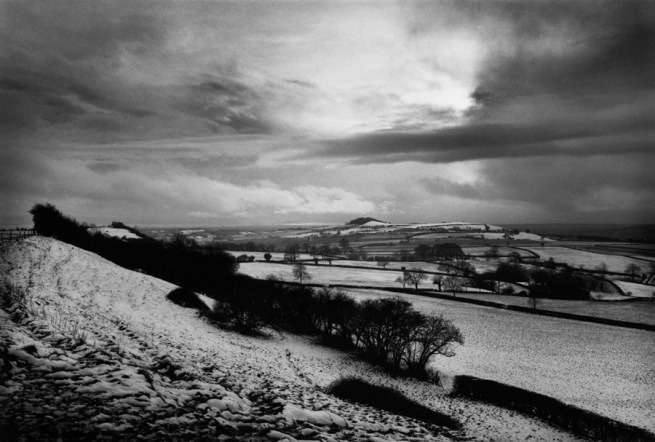
Towards an iron age hill fort
100 Photos de Don McCullin covers his career, with some of the best examples of his work across all subjects. Many of the images are sad, some express hope, all are moving. The lustre finish to the pages suits the, at times gritty and distressing, documentary style in many of the photographs. But his work isn’t without moments of joy. The young Teddy boy at a dance, the Beatles larking about and a young couple dressed up to go out all feature in this book, and show another side to the world McCullin has witnessed. Highly reccommended.
All photographs in this article are copyright Don McCullin.
100 Photos de Don McCullin pour la liberté de la presse is available from Amazon UK, but alas, does not seem to be on the US Amazon site at this time.

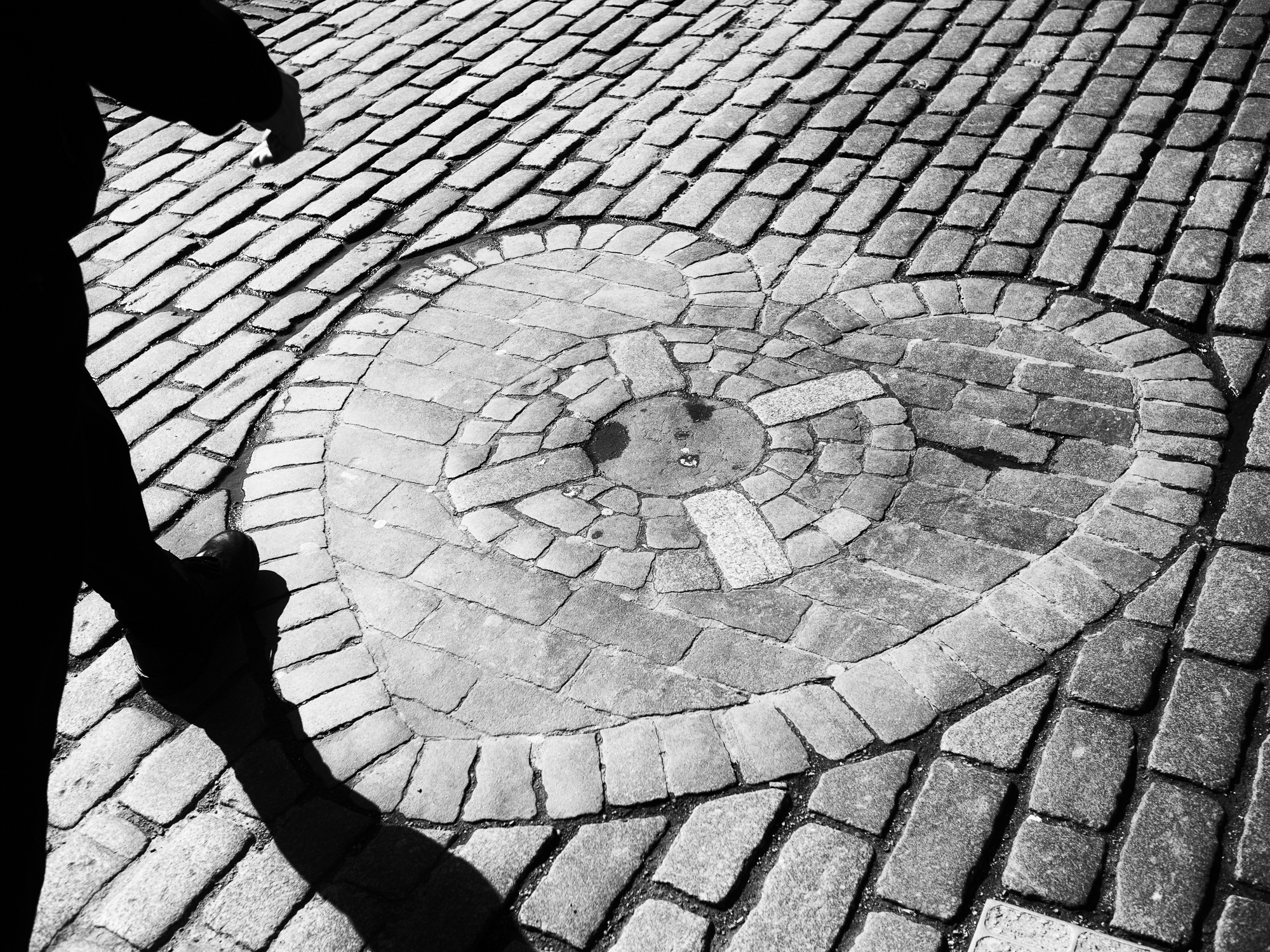
On the Royal Mile, Edinburgh, lies the Heart of Midlothian.
From Wikipedia:-
Visitors to Edinburgh will often notice people spitting on the Heart. A tolbooth (prison) stood on the site, where executions used to take place. The heart marks its doorway: the point of public execution. Some people spit on the Heart. Although it now said to be done for good luck, it was originally done as a sign of disdain for the former prison. The spot lay directly outside the prison entrance, so the custom may have been begun by debtors on their release.
 Mike Baker | Photography